Case Study · Regional Workshop · QLD · In-Room Builds
Three real business tools built live in one three-hour Longreach workshop.
June 2026Longreach QLDCommunity workshop3 hours9 participants
9
Participants, from across Central West Queensland
127
Pages in the take-home guidebook built for the session
3
Real builds live in the room
3 hrs
One hands-on session, foundations to live builds
The client
Digital Exchange
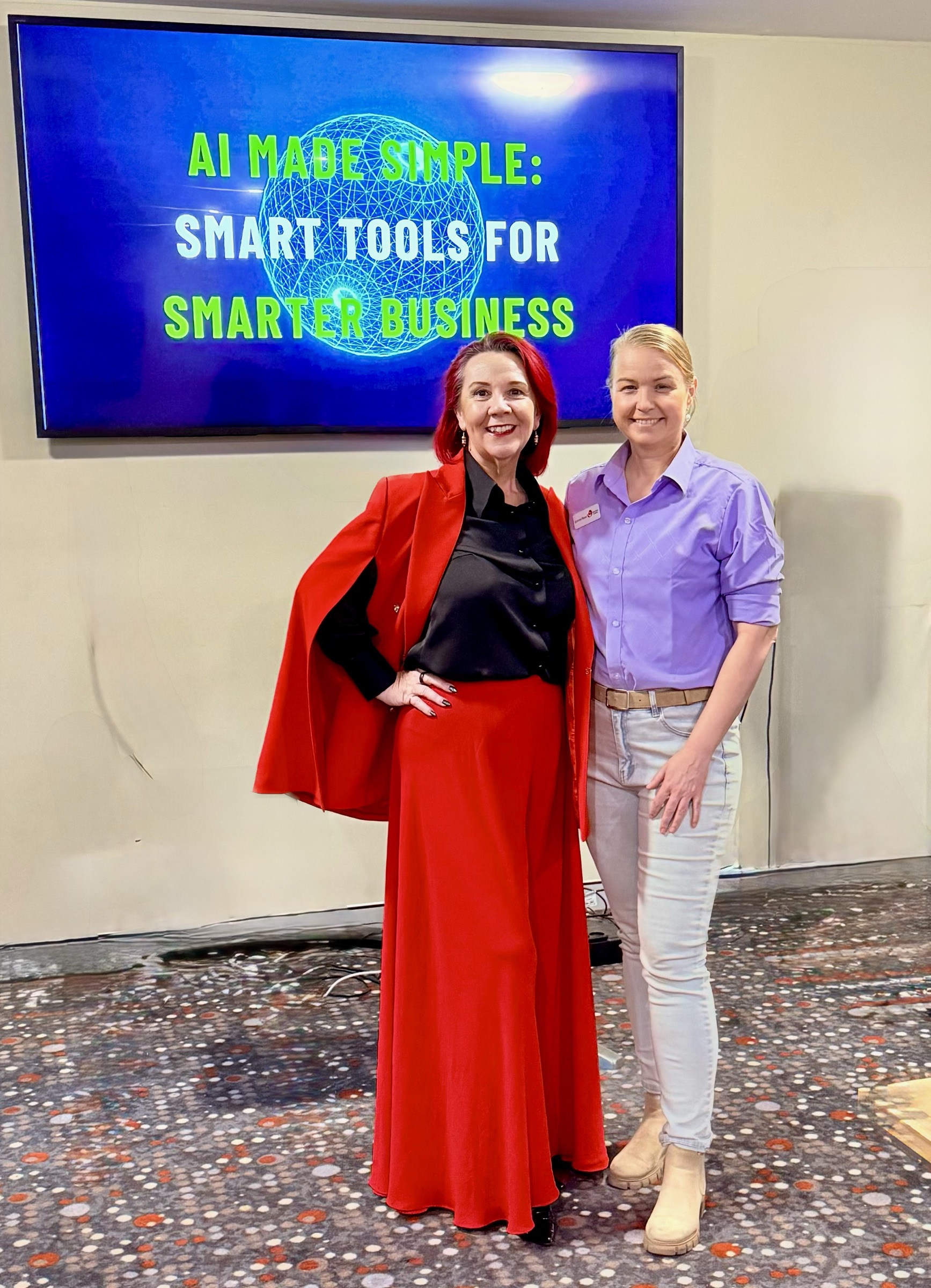
Digital Exchange backs regional Queensland communities and businesses to get hands-on with digital tools and technology. Its AI roadshow brings plain-language sessions to towns a long way from the nearest tech team, and the Longreach stop landed at the Birdcage Hotel on a Saturday in June. The room held small business owners, council staff, tourism operators, trades and community organisations from across Central West Queensland, most starting from curiosity rather than confidence.
The challenge
More than 1,000 km from the nearest tech team.
Longreach sits more than 1,000 km from Brisbane. Out here there is no IT department down the hall, no consultant around the corner and no patience for tools that waste time. The registration answers told the story before the day began. People wanted to know which AI tool fits which task, how to protect customer data and IP while using one and what any of it looks like on a Monday morning.
What the registration form asked for:
- Which tool suits which job, without the guesswork
- Using AI while keeping customer data, IP and privacy protected
- Grant writing and document upkeep for community organisations
- Social posts and content for one-person businesses
- Reading contracts and compliance documents with confidence
One more thing made this room different. Marty and Raelene, a local building couple, arrived carrying real jobs: a roofing measure-up in Marty’s site notebook, a quoting process that lived in his head and Raelene’s question about design mood boards. The workshop put all three to work.
What we did
One session, real jobs on the table.
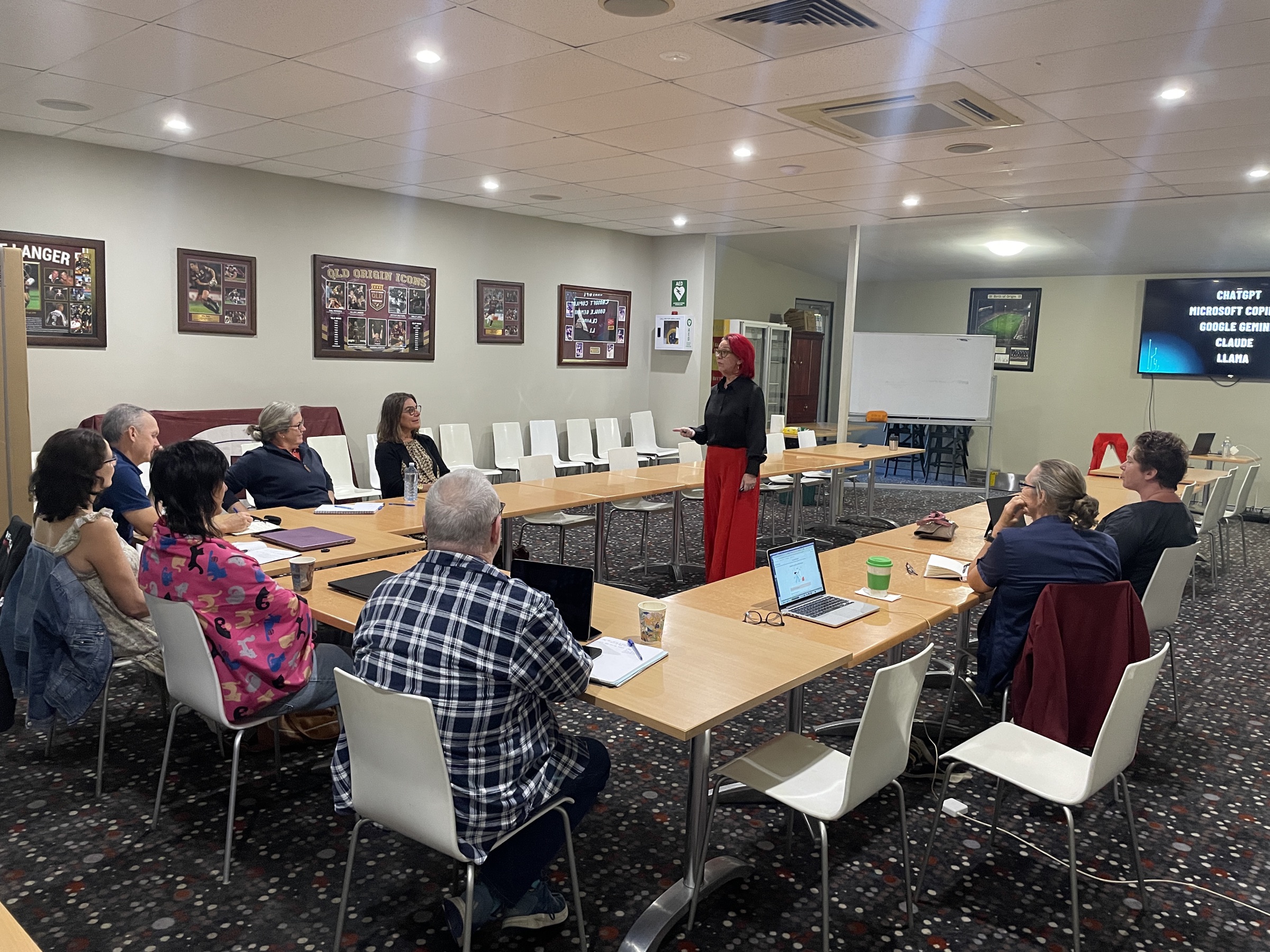
AI Made Simple ran as a three-hour hands-on session. Foundations first: plain-language terminology, the four major AI platforms compared side by side and the safety rules that protect a small business before anything else happens. The starter versions of the GIST and HUMAN frameworks went in early so every build that followed had guardrails under it.
Then the room’s own work took over. Prompt building ran through the 5-Question Checklist and the Columbo Close, Tracy’s signature refinement technique. Participants started their AI Buddy Brief, the reusable business context that turns a generic assistant into their assistant. And three real jobs from the room were worked live on screen, start to finish, with every question, correction and dead end left in view. No polished demo. The actual conversation.
What was delivered
Three live builds and the library that extends them.
The builder’s quoting assistant
Sales and quoting
Marty, a local builder, wanted his quotes drafted for him. The room built the full instruction set live: pricing rules, QBCC contract thresholds, travel and freight logic for remote jobs, voice matching from his real quotes and one golden rule, the assistant never invents a price. He left with a reusable system ready to test against a real job.
The roofing take-off
Estimating and operations
A phone photo of Marty’s hand-drawn measure-up, taken on a job at a remote homestead, became a materials take-off (67 sheets of iron, roughly 480 lineal metres), a ready-to-send supplier email and a labour reality check. The paper estimate said 203 to 258 tool hours. The real job ran close to double. That gap, and the multiplier it teaches, was the most useful number of the day.
The home concept brief
Creative and client work
Raelene registered asking whether AI could build mood boards that evoke a feeling. Her question became a full home concept brief: site response, an indicative floor plan, a materials palette and a design team brief ready to hand an architect. Proof the same method serves creative work as well as it serves the trades.
The take-home library
Skills that survive the drive home
Every participant left with a 127-page guidebook built for the session, 12 swipe prompts, an AI Buddy Brief template and, in the days after, two worked-example walk-throughs documenting the live builds step by step. The method went home with the room, not just the memory of it.
The outcome
Working output, not good intentions.
Three real business tools existed at the end of the session that did not exist at the start. That is the headline. Not sentiment, not good intentions, working output: a builder’s quoting system with its guardrails written before its first quote, a materials take-off with its supplier email drafted from a photo of a notebook and a home concept brief that turned a mood board question into an architect-ready conversation.
The quieter outcome sat in the method. Every build ran the same sequence in front of the room. Guardrails first. Flag every guess. Ask before building. Let real data correct the model. The roofing example made the point better than any slide could: the paper estimate said 203 to 258 tool hours, the real job ran close to double, and every quoting business in the room now owns a multiplier it can apply next week.
What happened next
The method went home in writing.
The two worked-example write-ups went out to the room within days, each one a step-by-step record of a live build so the method could be copied, not just remembered.
Three takeaways
Portable lessons for similar buyers.
- Start with what you have. A phone photo of a notebook page was enough to begin the most technical build of the day. Clean data is not the entry requirement. Willingness is.
- Guardrails before builds. The quoting assistant’s rules, including the one about never inventing a price, were written before it drafted a single line. That order is the difference between AI a business can trust and AI that quietly embarrasses it.
- Real jobs beat demos. Every build ran on live work from the room, corrections and dead ends included. The method went home proven, which is why it gets used on Monday rather than admired on Saturday.
Is this right for your organisation?
This case study is for regional development programs, councils, economic development officers and community organisations who run AI sessions for their business communities. If your businesses are asking what to actually do with AI, if your funding needs outcomes you can point to rather than attendance numbers and if your community is a long way from the nearest consultant, this format was built for exactly that room.
The thinking behind this engagement, written up: AI tools that give you time back: five jobs to hand over this week
Bring a workshop like this to your region.
A hands-on session that works your community’s real jobs live in the room, with take-home material that keeps teaching after the trainer leaves town.
See speaking and workshops →